
As the internet ascended into a global, dominating force with the power to defy physical borders and connect everyone who connects to it, the dream that it would break down the invisible barriers that divide us rose with it.
With so much information available at our fingertips, one would assume that we would be become smarter, more educated, and therefore more open-minded or empathetic towards our fellow humans and their customs, thoughts, and beliefs. Instead, it seems to have caused further separation, as algorithms in our social media feeds show us the news that we agree with and the phenomenon of selective exposure causes us to only seek out the information that makes us confident in our convictions. Instead of bringing us together, it seems we are being torn apart. Welcome to the Splinternet.

While the Digital Age has caused a renaissance of informational enlightenment, in many ways it has brought out the ugly side of humanity. Anyone, anywhere can now create content and share it with the world. Disinformation is rampant, and when people can hide behind a computer they feel a false sense of bravado in spewing lies, hate, and propaganda without consequence.
In the US, the First Amendment protects the freedom of speech; however, those freedoms do not extend to hate speech, inciting crime, fighting words, or true threats. But when the internet has global reach, how can the laws of just one country govern it? And should it be the government’s job to regulate the internet? Or should it be up to the private companies who’s platforms are used to spread the messages of hate, violence, or lies? Who’s responsibility is it?
Not a one size fits all solution
The splinternet has landed us in the middle of an internet gray area with no simple solution.
Europe, and Germany in particular, have been on the forefront when it comes to laws preventing hate speech and maintaining data privacy online. In 2018, Germany enacted tough new legislation to combat hate speech, including a provision in which “companies [who] systematically fail to remove ‘obviously illegal’ content within 24 hours can face fines of up to 50 million euros.”
But what some people may view as offensive, may not appear that way to others, and with so many cultural differences, what is ok in one country may not necessarily be ok in another. So where does regulation end and censorship begin?
In a 2019 Washington Post OpEd, Facebook CEO Mark Zuckerberg contended that the government and third-party regulators need to play a more active role in supervising the internet, stating, “we need new regulation in four areas: harmful content, election integrity, privacy and data portability.”
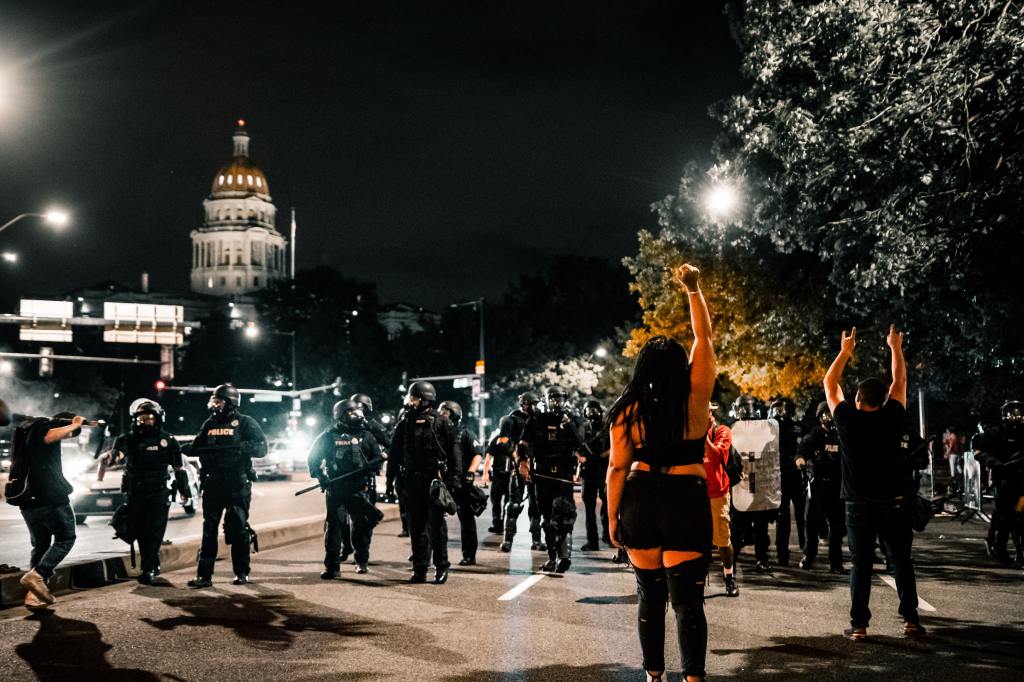
During the start of the pandemic, in the midst of social unrest, and leading up to the 2020 US elections, many social media companies launched a war against misinformation online. After the events of the January 6th insurrection at the US Capital, the boiling point was reached, and private companies made the tough decisions to shut down user accounts or entire platforms for violating their terms of service or laws against hate speech and inciting violence.
But even while taking these necessary steps to reduce the flow of misinformation and hateful propaganda being spread online, private companies still want governments to offer guidance and take some of the burden of regulating the internet from their digital shoulders.
But while governments can make laws about online speech, private companies are still left to interpret how to follow them; therefore, some countries will still ban specific platforms, while other countries ban the internet all together.

With so many different views it seems almost impossible that we can come to a full agreement. The Splinternet leaves open so many questions, without giving so many answers, but as Uncle Ben in Spiderman said, “With great power comes great responsibility.” And perhaps while we wait for governments and private companies to figure it out, by being thoughtful and personally responsible for what we ourselves share online, we can help fulfill the dream of the internet bringing people together.
The following sources were cited in this post:
- Bennhold, K. (2018, May 19). Germany Acts to Tame Facebook, Learning From Its Own History of Hate. In The New York Times. Retrieved from https://www.nytimes.com/2018/05/19/technology/facebook-deletion-center-germany.html
- Campbell, Richard, et al. Media & Culture: Mass Communication in a Digital Age. 12th ed., Bedford/St. Martin’s, 2019, pp. 9, 485.
- Ovide, S. (2021, February 17). The Internet Is Splintering. In The New York Times. Retrieved from https://www.nytimes.com/2021/02/17/technology/the-internet-is-splintering.html
- Zuckerberg, M. (2019, March 30). Opinion: Mark Zuckerberg: The Internet needs new rules. Let’s start in these four areas. In The Washington Post. Retrieved from https://www.washingtonpost.com/opinions/mark-zuckerberg-the-internet-needs-new-rules-lets-start-in-these-four-areas/2019/03/29/9e6f0504-521a-11e9-a3f7-78b7525a8d5f_story.html
 Lisa G Alford